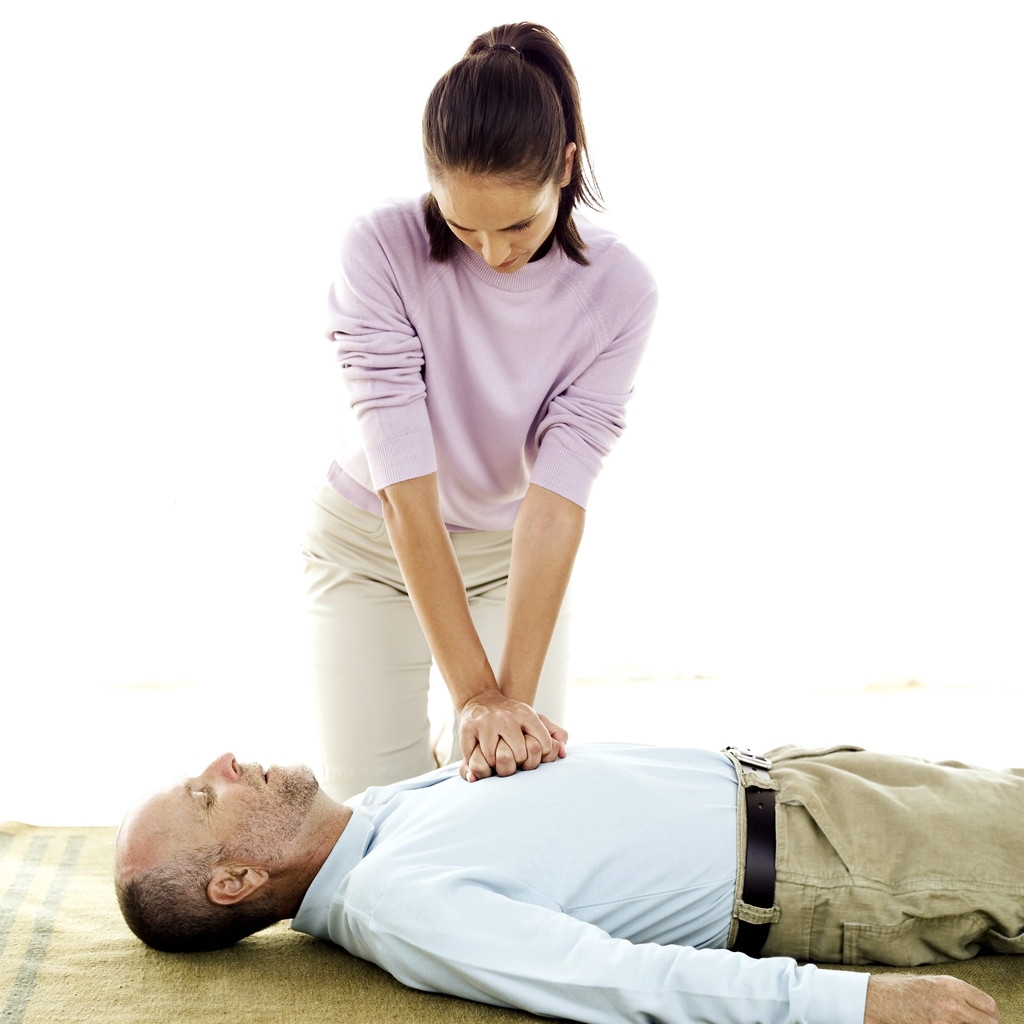
I just recently completed a challenge course and received my 2 year certification in CPR and AED training. Honestly, this is a requirement of the University of South Carolina, as all professors teaching courses in the physical education program must be certified.
However, I believe learning CPR is just good self defense, as you never know when you might need to use it. Consider some of the statistics I reviewed at the Women's Heart Foundation:
Heart Attack Facts
1.5 million heart attacks occur in the United States each year with 500,000 deaths.
More than 233,000 women die annually from cardiovascular disease.
A heart attack occurs about every 20 seconds with a heart attack death about every minute.
Sudden death is more common among women with heart attack.
The National Registry of Myocardial Infarctions (New England Journal Med., 22Jul99) reports that women have a worse outcome than men after having a heart attack. Data showed that women under the age of 50 had twice the mortality of men after having a heart attack. Variances likely reflect increased severity of the disease in younger women.
Almost 14 million Americans have a history of heart attack or angina.
About 50% of deaths occur within one hour of the heart attack ––outside a hospital.
There is a 6% to 9% early mortality from heart attack for those who survive long enough to reach the hospital.
From 1983 to 1993, heart attack deaths fell about 30% overall but have not fallen nearly as much for women.
Studies show the most common time for a heart attack to occur is Monday morning. Saturday morning ranks second. Another common time is during the early morning hours, when blood platelets are stickier.
Deaths from cardiovascular diseases in women exceed the total number of deaths caused by the next 16 causes.
60% of women erroneously listed cancer as the leading cause of death among women. Deaths from all cancers in the USA are half as common as deaths from cardiovascular disease.
Only 31% of women know that cardiovascular disease is the leading cause of death in the USA.
On the average, women take 2-4 hours longer than men to respond to symptoms of heart attack, limiting the beneficial use of some newer treatments like clot busters that work best within the first hour after onset of pain or discomfort.
Chewing an uncoated aspirin right away, at the first sign of chest discomfort or distress, can reduce the amount of damage to the heart muscle during a heart attack.
Costs related to heart attack exceed 60 billion dollars per year.
Heart attacks continue to be one of the top 10 killers for men and women in the United States. I think it only makes sense to train as many people as possilbe, particularly, since the first few minutes of a heart attack are critical to the survival rate. Knowing CPR and how to use an AED might just save the life of someone you know and love!
If you would like more information, you should contact The American Red Cross for dates and times of their classes. Certification usually takes 2-3 hours depending on your knowledge or experience in CPR and generally costs around $50.
Sensei Chris Feldt
Samurai Karate Studio
Columbia, SC 29229
803-462-9425
samuraikaratestudio@gmail.com
Comments
Post a Comment